

Closing tickets- when the customer does not even know
Scroll through one day of public service complaints in India and a pattern keeps returning. Closing tickets is a spectator sport being played out in Indian social media. It isn’t the defect itself. It’s when a customer finds out their complaint was marked “resolved” while the product still doesn’t work.
The evidence: when the customer says no
In a single day’s posts on X, we counted at least five cases like this, across five different brands. A complaint marked resolved with no response. A job card closed while the scooter still sat at the service centre waiting for a spare part. A service team more keen to collect the closure code than to send help. A complaint pending for a year, closed without the customer being consulted. An official reply saying the complaint was closed and the customer should contact their service centre.
Why closing tickets is not just a spring-cleaning activity
You may read these as bad faith. We say, the cause is ordinary, and fixable.
When closing tickets, most service networks measure what is easy to count: tickets closed within the turnaround time. A service team juggling back-ordered parts, seasonal load and a daily target faces a quiet incentive to close now and reopen later. Where technician incentives depend on closures, they learn the same lesson. Nobody sets out to mislead a customer. The metric does the persuading.
For the customer, a prematurely closed ticket hurts more than the original fault. The defect felt like bad luck. The closure feels like being told they don’t matter. That’s usually when a patient complaint becomes a public post tagging the CEO and the consumer helpline.
A few lessons for anyone running a service operation:
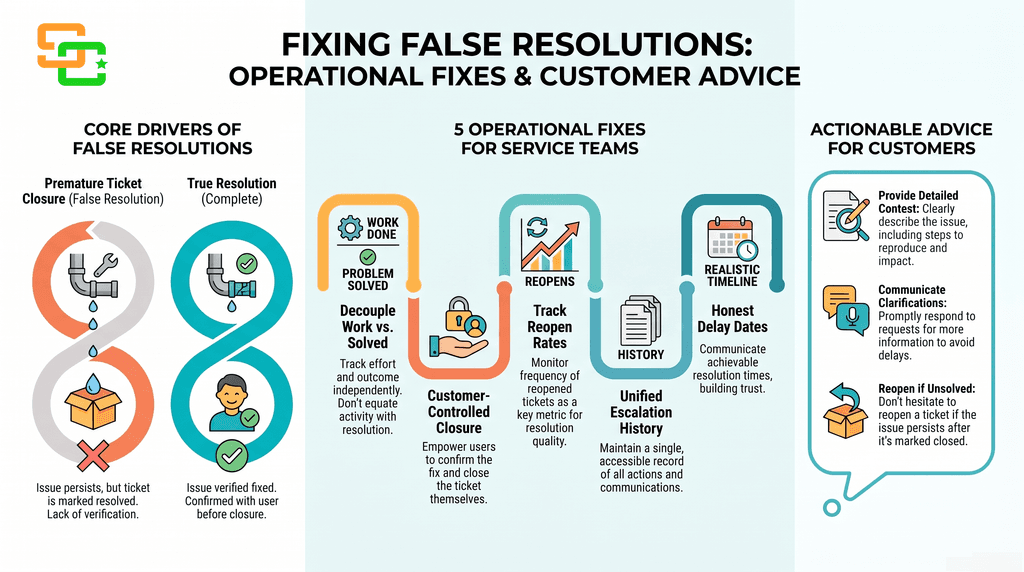
- Separate “work done” from “problem solved.” Waiting for a part is a legitimate state. Give it its own status and an expected date instead of forcing a closure.
- Let the customer close the loop. A closure code or OTP only means something if the customer shares it after the fix, never before.
- Track reopen rates as closely as closure rates. Faster turnaround with more reopens isn’t improvement. It’s just moving the problem.
- Make escalations travel with the case. When the brand promises an update in 48 hours and the service centre hears about the escalation four days later, the customer is the only one holding the full history.
- Be honest about delays. “Your replacement is months away” is unwelcome. “Resolved” when it isn’t is worse.
And for customers:
- Keep every complaint number.
- Get a formal answer why a ticket was closed.
- Reopen the same case rather than starting a new one.
- The history is your strongest evidence.
Closing a ticket is an internal event. Only the customer can confirm a resolution. The service teams that earn trust are the ones that never confuse the two.
Leave a Reply